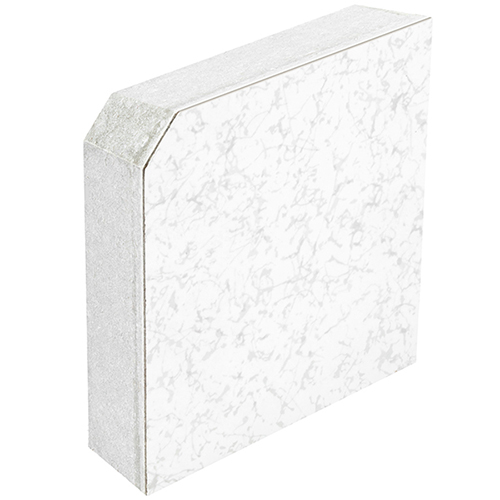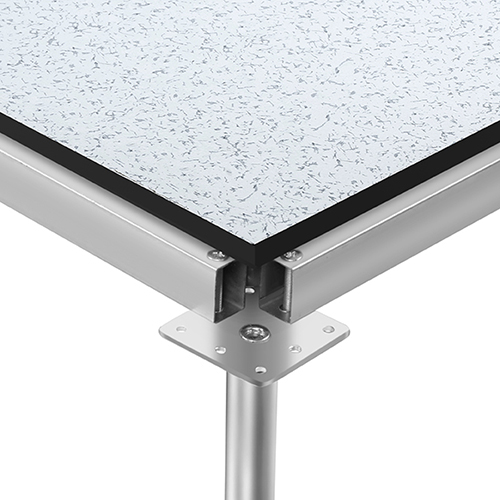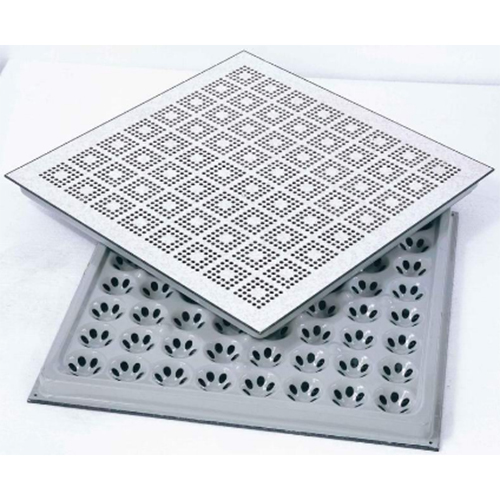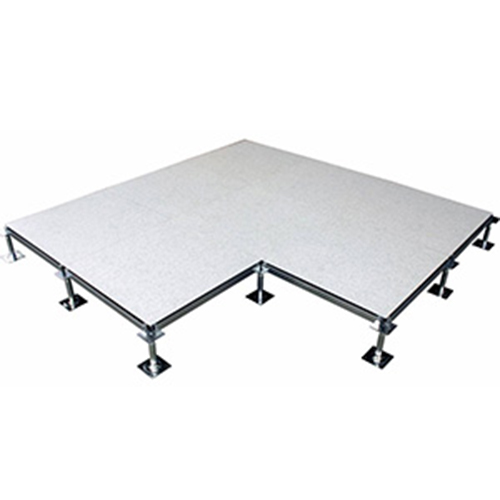
To be honest: Some anti-static flooring may indeed contain formaldehyde. This is because during the production of the base material, adhesives are used, and formaldehyde is one of the main components of the adhesives. However, this does not mean that all anti-static flooring has problems. The key lies in whether it meets the national standards. According to the national standards, the formaldehyde release from the base material should reach the E1 level standard, that is, the formaldehyde release should be less than 9mg/100g...
Here is a simple method for you: Use the weight of the heaviest equipment in the computer room as the benchmark. An ordinary server cabinet with full configuration weighs approximately 300 to 500 kilograms. The bottom usually has 4 load-bearing feet, and the recommended concentrated load for the floor should be no less than 4450N (about 454 kilograms). Large core switches or storage devices can weigh up to 600 to 800 kilograms per unit, and it is recommended to start with the Z-level (concentrated load ≥ 5560N, about 567 kilograms). If it is an UPS battery pack or a distribution cabinet...
The differences in materials are quite significant: The all-steel anti-static floor, under normal use and maintenance conditions, can generally be used for 10 to 15 years; the ceramic surface floor, relying on the stability of the ceramic base material, can have a service life of over 20 years; the aluminum alloy floor, due to the corrosion resistance and non-corrosion nature of the aluminum material, also has a very long service life, with a regular working condition, it can last for more than 15 years without any problem. Warranty period and service life are two different concepts...
The anti-static floor is constructed using dry assembly method, unlike tiling which requires wet operations with cement mortar. The main processes include laying out lines, installing supports, and laying the floor. The entire process does not require water or the mixing of cement, so there will be no large amounts of dust or unpleasant odors. Of course, when cutting the floor on-site, there will be a small amount of dust and noise, but professional construction teams will take protective measures - such as setting up protective barriers in the cutting area and using cutting equipment with dust absorption functions to minimize the impact...
Method 1: Review the report. Official manufacturers will definitely provide product test reports issued by authoritative institutions. Focus on several key indicators: whether the resistance value is within the standard range of 10⁶ to 10⁹ Ω, and whether the concentrated load and uniform load meet the requirements. If the merchant is evasive and fails to produce the report, or if the content of the report is unclear, you should be cautious. Method 2: Inspect the sample by hand...
The clearance height of the anti-static floor refers to the distance from the floor's finished surface to the original ground. This space is mainly used for running cables, installing pipes, and serving as the air duct for air conditioning ventilation. The clearance height mainly depends on three factors: The first is the quantity and type of cables. If only a few network cables and power cables are run, the height doesn't need to be too large, 10 to 20 centimeters will suffice. However, if there are many equipment in the computer room, the cables are dense, or there is a requirement for separation of power and signal lines...
Total38
Total pages:7 |
Current page:1
9The first page
7Previous
Next8
The last page:
Jump