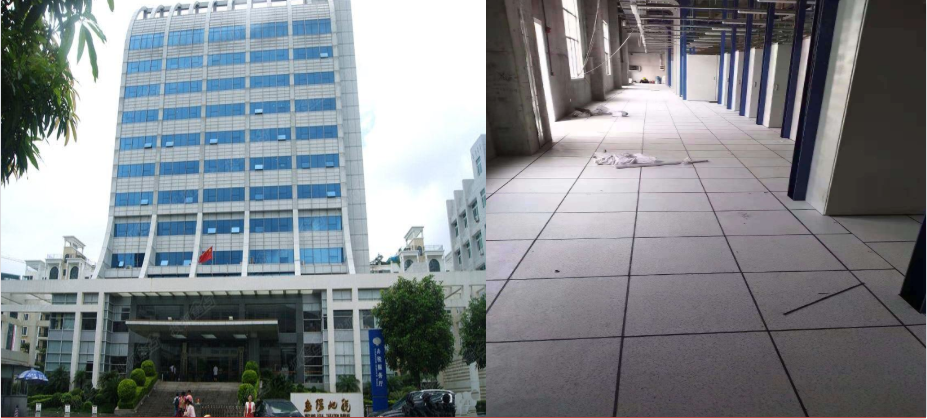
Dongguan is an important birthplace of Lingnan culture, the beginning of modern Chinese history, and a pioneer of China's reform and opening up. It has a unique Lingnan culture.
Dongguan is located on the east bank of the the Pearl River Estuary, a famous historical and cultural city in Guangdong, with a history of more than 1700 years. Dongguan City borders Huicheng District and Huiyang District of Huizhou City to the east, Longgang District and Bao'an District of Shenzhen City to the south, Nansha District, Panyu District, Huangpu District and Zengcheng District of Guangzhou City to the west, and Boluo County to the north. Surrounded by 10 county-level administrative regions in Guangzhou, Shenzhen, and Huizhou.
Dongguan was abolished as a county-level city in 1985 and upgraded to a prefecture level city in 1988. At present, Dongguan City governs 28 towns and 4 streets; 386 administrative villages and 205 communities. Dongguan City is one of the five prefecture level cities in China without any municipal jurisdiction, directly under Guangdong Province.
The total area of Dongguan is 2465 square kilometers. In 2011, the population exceeded 12 million, including 8.2548 million resident population, including 1.8477 million registered residence population. There are also 4.1362 million temporary residents. Among them, there are about 1 million compatriots from Hong Kong and Macao, and about 300000 overseas Chinese, making it a famous hometown of overseas Chinese. Dongguan is known as the hometown of dragon boats, Chinese folk art, weightlifting, and Cantonese opera.